

Meet the anger
Your child is overwhelmed – and you want to stay warm while still holding clear limits.

 For parents who want to live connection
With the five tools, you can find your way back to closeness and connection in difficult moments.
Your next step
Over six weeks, you practise supporting your child through anger and fear, setting loving limits and finding support for yourself. We work with situations from your family life: you learn the five tools, try them at home and discuss your experiences with the group.
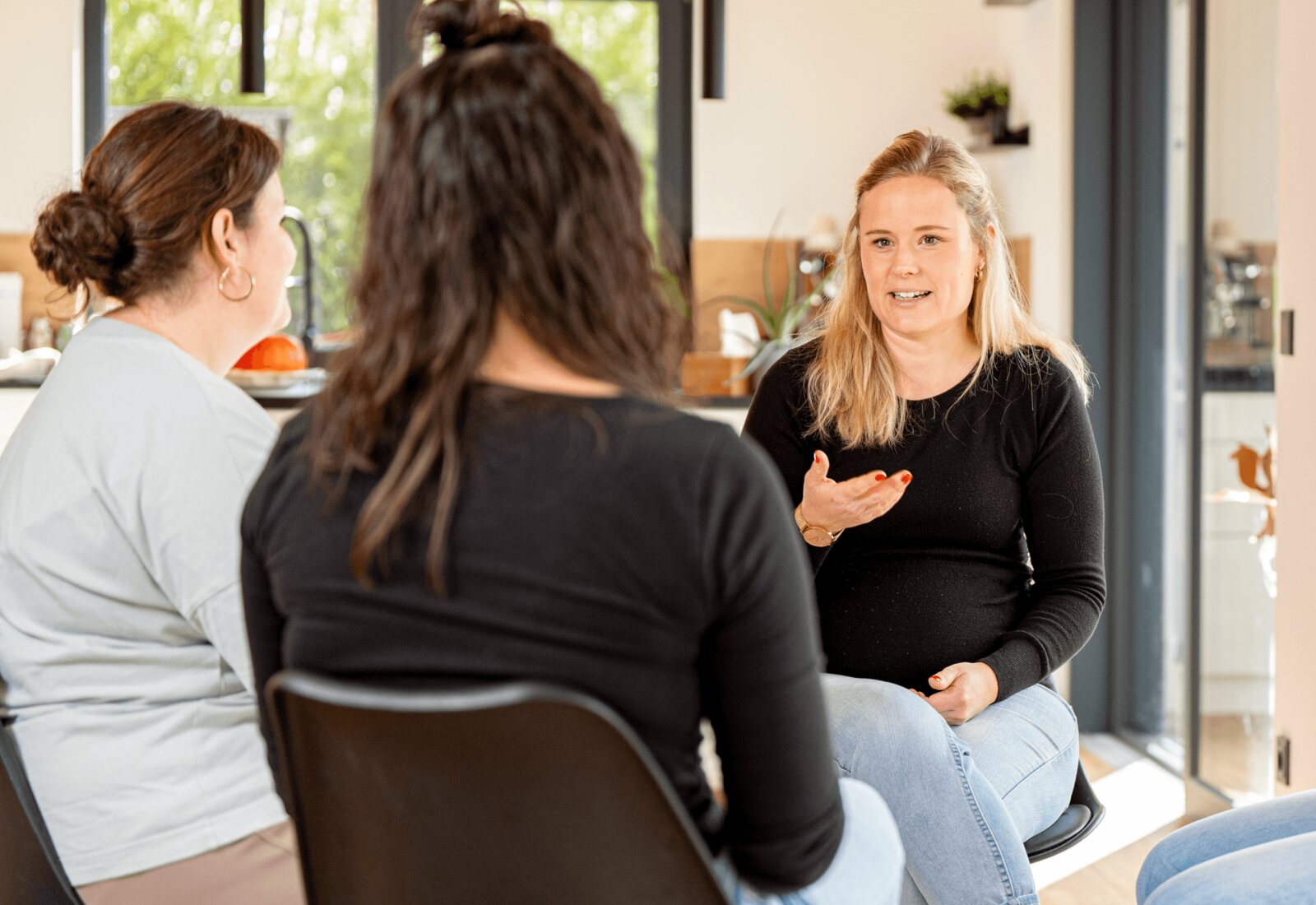
“It is wonderful to connect with other parents, genuinely and at eye level.”
 A personal small group of 4–7 parents6 weeks online · 2–2.5 hours each week60-minute coaching & WhatsApp support with JuliaIn-depth materials to deepen your understanding of all five toolsFind a Listening Partner in the course
€399 per person
Friends’ price: €349 per person when registering together.
New dates on request

Still unsure? Book a free 20-minute call
You are not alone
When big feelings overwhelm your child, you want to help – and sometimes feel at a loss yourself. Hand in Hand offers support and ways to reconnect.
Your child is overwhelmed – and you want to stay warm while still holding clear limits.

Your child cries before nursery or school each morning. You feel helpless: how can you help them work through their fear and find a sense of safety and joy again?

You want to be there for your child – and sometimes feel helpless or exhausted yourself.
Connection is the key
“My attitude has changed. I can feel how much more secure and grounded my children are.”

Hand in Hand Parenting
Five ways to build more connection – for big feelings, clear limits and your own capacity.

Give your child 5–20 minutes in which they lead. This builds safety, trust and deep connection.
On my son’s second birthday, the whole family was gathered, and the energy in the house was high. While we were eating cake, I noticed that my daughter, who was four years old, was completely off track. She threw an orange across the table and then started licking her grandpa’s face. These were clear signs that she was struggling and unable to think clearly.
At that moment, I decided to use Special Time. I said, “Come on, let’s step away for a bit. Let’s have some Special Time.” She immediately agreed, and we headed to her bedroom. She told me she wanted to read a book together.
We snuggled into her teepee, set a timer for ten minutes, and spent the time reading a book together. This focused attention seemed to be exactly what she needed. We stayed there until the timer went off, enjoying our quiet time and connection.
When we went back downstairs, she was completely calm and content. The rest of the birthday celebration went smoothly, with no more signs of distress.
Stop off-track behaviour with love, closeness and respect — without punishment or shame.
My son was 2 years old at the time, and the day before had been a lot for all of us. We’d spent the entire day visiting family, my parents and my aunt, and it was stimulating and exhausting. He fell asleep on the way home and didn’t get to bed until around 9 PM. I even thought “Tomorrow might be a day with a lot of emotions coming up.”
And it was. He woke early despite the late bedtime. I could tell right away he was not his usual self: tired, sensitive, and off track. It was Easter morning, and we were trying to prepare a festive brunch. But everything was difficult with an off track toddler in tow.
Then I started washing the grapes. He asked for one, and his sister sweetly offered him one, but it wasn’t the right grape. He threw the grape onto the floor. Then he picked up a second grape and was just about to throw it too.
I stepped in and gently placed my hand on his, just enough to stop the throwing motion. I knelt down to be at his level and said calmly, “I can’t let you throw the grape.” And with that, the dam burst.
He screamed. He stomped. He cried loudly, fully, heartbreakingly. I stayed right with him, soft eyes, grounded voice, not budging on the limit but offering all the connection I had. I said gently, “I can’t let you throw the grape.”
It lasted a long time. At least 15 of intense crying, yelling, stamping. And I stayed, soft eyes, open heart, holding the limit with warmth. I could see how overwhelmed he felt, how much had been stored up from the day before. I didn’t fix it. I didn’t distract. I just listened.
And slowly, he softened. The storm passed. He ate the grape slowly, with real enjoyment. He asked for more and sat contentedly eating them one by one. The rest of our Easter brunch was peaceful and joyful. He was grounded again.

Stay present through big feelings, so your child can move through them and return to balance.
One morning, my son, who was two years old, wanted a very specific breakfast: mashed banana mixed with grated apple. He started grating the apple himself but, after a while, simply decided he didn’t want to continue and asked me to do it. I finished grating the apple, added it to the banana, and mixed everything together.
The moment I stirred the bowl, he burst into tears. He cried, “I wanted to mix it! I wanted to mix it!” But it was too late: the banana and apple were already blended.
I could have tried to explain that
I was only helping, that the food would taste the same or that we could make another one. Instead I chose Staylistening. I knelt down to his level, put a gentle hand on his back, and simply said, “I’m sorry. I didn't know.”
He sobbed and sobbed, his whole body shaking with the intensity of his feelings. I didn’t try to distract him or minimize his emotions. I just stayed with him, looking into his eyes, listening, and repeating softly, “I’m sorry. I didn’t know you wanted to mix it.”
He cried for a long time, maybe ten or fifteen minutes. Then, almost suddenly, he took a deep breath, looked at me, and said, “Okay, I want to eat it now.” He carefully carried his bowl to the table, sat down, and ate his breakfast peacefully.
Small things can feel huge to a young child, and that when we hold space for their emotions instead of shutting them down, they can move through their upset and return to connection.

Use play and laughter to release tension, fear or anger and bring more ease into family life.
My daughter was 5, and my son was almost 3, when we visited a friend whose daughter is the same age as mine. It was getting late, and I let the kids know ahead of time that we’d be leaving soon. My son was ready when the time came, but my daughter was absolutely not. She and her friend were having the time of their lives and had no interest in ending it. In fact, they decided they were going to sleep over and declared they weren’t leaving.
As I started collecting our things, I could feel a sense of “Oh no, what now?” rising in me. I wanted to stay connected, and I didn’t want to go into threats or power struggles. So I decided to shift into Playlistening.
I began expressing my “helplessness” in an exaggerated, playful tone: “But what will I do if you don’t come with me?” My daughter grinned and called back defiantly, “I’m not coming!” Her friend joined in, and together they hid on the trampoline in the yard.
I followed them in full play mode. Her friend blocked the entrance and shouted, “You can’t come in here!” I gasped in mock dismay, “Oh no! Do you really think I can’t get through here?” I tried squeezing through dramatically, failing on purpose. I went to the other side. “Maybe this way?” Again, “Nope! Not working!” They giggled and shrieked with delight.
Eventually, I made it onto the trampoline, and her friend knocked me down with great enthusiasm. Every time I tried to get to my daughter, I’d get toppled over again. I went all in, groaning dramatically, flopping over, trying again and again. The two girls were roaring with laughter.
Eventually, I gently went to my daughter and said with warmth, “It’s time to go.” She paused, then said, “Okay. I’ll go a different way and meet you at the car.” I said, “Alright,” and went toward the car. Sure enough, a moment later, there she was.
It took some time before we were able to leave. But I didn’t have to threaten or disconnect. Playlistening gave us a playful way through the resistance.
Exchange listening time with another parent to release emotions and create capacity for your child.
When my daughter was four years old, she had to undergo a dental procedure under general anesthesia. The experience was deeply traumatic for both of us. Six months later, we had another dental appointment because she developed a gum infection, and a tooth needed to be extracted under general anesthesia. When I learned we had to go through it again, all my old fears and memories resurfaced, especially the helplessness of watching her look at me with fearful eyes. I felt overwhelmed with anxiety and started wondering if I should send my husband instead to avoid reliving that experience.
I decided to turn to several Listening Partnerships. I opened up to my listeners about my fears and the lingering anger I had towards the doctors who had treated us poorly the first time. As I spoke, I could feel the emotions welling up, and I allowed myself to cry. I sobbed as I recalled my daughter’s frightened eyes and my own sense of powerlessness in that moment. I even pretended to yell at the doctors, expressing everything I hadn’t been able to say at the time. My listeners simply held space for me, accepting everything I said without judgment or advice.
As I let the tears flow and fully expressed my feelings, I felt a shift. I tapped into a new sense of empowerment. I realized I wanted to be there for my daughter this time, to show her that I don’t leave when things get hard. I told my husband “I can do this,” and I went into that appointment with confidence.
During the procedure, I clearly expressed to the medical staff how I wanted things handled. Everyone respected my requests. When it became time for the anesthesia, I held my daughter close and looked into her eyes. “I’m right here with you,” I told her. She fell asleep peacefully in my arms, and I stayed grounded and calm throughout.
The experience was so different from the first time, and I know it wouldn’t have been possible without the Listening Partnerships. Being able to release the burden of my old feelings, and to face my fears allowed me to be fully present for my daughter when she needed me most.
About Julia
Certified Hand in Hand Parenting Instructor and mum of three

I was reading parenting books before I became a mum. I wanted to meet my children with love and build a close connection with them. When my second child arrived, I still found myself asking the same question: How can I meet both their needs?
Hand in Hand has changed our family life. I have learned to hold clear limits, listen to big feelings and stay close to my children even when things are difficult. That has given me a confidence I now share through my work.
In my courses, we look at the situations that matter to you. I show you how to use the tools – and support you in finding the steadiness you want to offer your child.
I always wanted to be a mum. Long before I had children, I was reading parenting books. I wanted to meet my children with love, understand them and build a relationship in which they felt safe and accepted.
When I became pregnant, I knew I also needed to start with myself. I began meditating, went on a meditation retreat and spent a lot of time learning about attachment-oriented parenting. I felt well prepared.
With my second child, I still reached a point where I did not know what to do. Two children needed me, often at the same time. I could not be in two places at once. Whenever I cared for one first, I felt I was letting the other down. That weighed heavily on me.
Around that time, my husband recommended Listen by Patty Wipfler, the founder of Hand in Hand. My first thought was: Please, not another parenting book. I had already read so much. What could this one possibly tell me?
On holiday with friends, we opened it after all. We had a very specific question: What do we do when two children want the same toy?
The answer surprised me. The child who is playing with it can keep it until they are finished. Meanwhile, we stay with the child who is waiting and listen – including to their disappointment and anger.
Until then, I had put a lot of effort into sparing my children those feelings. I wanted to calm them, comfort them and make things better quickly. Now I began to understand that I could also offer something else: my closeness and the reassurance that they were allowed to have their feelings.
I read the whole book and began using the tools. I saw how much could change when I listened and gave my children time. How lightness returned after tears. How they began trying things on their own that had been difficult before. That stayed with me – and led me to explore the approach more and more deeply.
I took the Starter Class and then completed the training to become a Hand in Hand Parenting Instructor. I wanted to make this work available to other parents because I had experienced the difference it can make to a family.
Listening Partnerships are an important part of that for me. They give me someone who listens to me, too. I can say what is on my mind, make room for my feelings and begin to see more clearly again. After the birth of my third child, I felt just how much that support meant. Sometimes all it took was a message: Does anyone have time to listen? I knew someone was there.
Today, the tools are a natural part of our family life. I have a better understanding of what is behind my children’s behaviour and can decide what will help them: a clear limit, laughter together, undivided attention or time to cry. That gives me direction and confidence in how I respond. And it has brought us much closer.
In my courses, I therefore offer both: the Hand in Hand tools and the support we need as parents to make using them easier. We work with what you bring from your everyday life. You get practical guidance, can try things out, ask questions and talk through your experiences.
I know from my own life how much this can change. That is why I do this work.
“We don’t have to do this alone.”
Free conversation · 20 minutes

Continue personally
Sometimes you need a protected space just for you. In one-on-one coaching, I accompany you individually on your way.
Ask about coachingFrequently asked
The course is for parents, grandparents and other important caregivers – especially of children aged around 2 to 10. If one of your children is older, the course can still be a good fit for your family: it is never too late to strengthen your connection. No prior knowledge is needed.
If you are caring only for babies, older teenagers or adult children, please contact me before registering. Together, we can explore which support would suit your family.
We meet once a week for six weeks, for two hours. We discuss your experiences and questions, learn the tools and practise together. Between sessions, you try the tools in everyday life. Reading the additional materials is optional.
You also arrange a weekly Listening Partnership with someone from the course: time to listen to each other. Allow 20–60 minutes in total, shared equally between you. Even ten minutes each is a good start. You pair up with someone who has a similar amount of time available and agree on the length together. If it suits you both, you can continue your Listening Partnership independently after the course – this is optional and not part of the course.
We arrange your included 60-minute individual coaching session during or after the course. I answer your questions personally in the course WhatsApp group.
If you miss a session, you receive a recording of the theory part and the written materials so you can catch up on the content. Only the theory is recorded; personal discussion, exercises and Listening are not recorded. You miss this shared practice when you cannot attend.
Yes, please arrange for time without your children and as few interruptions as possible. Exercises and Listening especially need time for yourself and a private space where you can speak openly.
Breastfeeding a baby during the theory part is fine. Please arrange care for your baby as well during exercises and Listening.
If you are raising a child together, you attend separate courses. This gives each of you your own space to speak openly – especially during Listening.
Friends can attend the same course. Each person registers separately.
Still have a question? Send me a message – I’ll reply personally.
Learn the five tools step by step and try them out in your everyday family life.
A small group, personal support and room for your questions.
Room for your questionsIn a small group of 4–7 parents.Personal supportWith 60 minutes of individual coaching and WhatsApp support from Julia.Practise togetherThrough sharing experiences and a Listening Partnership within the course.“The Hand in Hand Parenting tools help me feel more confident and less helpless in difficult situations.”
These forms require JavaScript. Alternatively, email me directly at julia@juliasutter.de.
Thank you for writing to me!
I will get back to you personally by email.
Julia
Tell me when a course would work well for you. Your request is non-binding.
Send me your question or tell me what you need. I will get back to you personally.
If you’re unsure whether the course is right for you, book a free 20-minute call.